
Raising the Bar: How Competency Software Strengthens Laboratory Excellence
Innovations for the Laboratory

Maintaining laboratory quality is the central mission of every laboratory manager. Ensuring accurate and reliable results requires strict adherence to established policies and procedures. Yet, behind every quality process lies one essential foundation—personnel competency. At its core, competency assessment verifies that each laboratorian can perform testing accurately and consistently in accordance with performance specifications.
While the concept is straightforward, implementing competency assessments is anything but simple. It demands meticulous planning, documentation, and oversight. Each assessment involves structured activities such as direct observation of testing, review of test results, and verification of performance outcomes. Regulatory standards further require that all personnel performing moderate- to high-complexity testing be evaluated annually, and twice during their first year.
According to April German, CEO and Quality Assurance Director at Lab Connections, “The process is often confusing to understand, set up, and administer. The regulations are vague and can easily be misinterpreted, leading to delays in completing required assessments.” These challenges underscore the need for better tools and streamlined systems—an area where competency management software is beginning to transform laboratory operations.
Despite its importance, the competency assessment process has seen little innovation over the years. Most laboratories still rely on manual methods like spreadsheets, paper records, and legacy documents to develop, administer, and track their competency programs. Few software options exist that allow laboratories to build and manage their own customized competency test banks. As a result, much of the process is inherited from outdated policies and procedures, making it time-consuming, inconsistent, and difficult to keep aligned with current laboratory operations. This lack of automation not only creates inefficiencies but also increases the risk of errors, missed deadlines, and compliance gaps.
The need for modernization is clear: laboratories require tools that bring structure, standardization, and scalability to the competency process.
“The personnel competency program is one of the most overlooked areas for improvement in the laboratory,” observed Leitha Boutwell, Chief Operations Officer and Business Partner at Lab Connections. “Many labs are frustrated by the lack of software support and innovation available to streamline this process. April and I saw an opportunity to apply our industry expertise and vision to modernize how laboratories manage and maintain competency programs.”
Reimagining Competency: A New Vision for Laboratory Excellence
Recognizing the inefficiencies in traditional competency assessment, April and Leitha saw an opportunity to transform how laboratories approach this essential process. Their goal was ambitious: to create a software solution that would streamline competency management from start to finish, replacing outdated manual systems with a smarter, more integrated approach. They envisioned a complete reimagining of the process—leveraging modern software and hardware to make competency assessments not only easier to administer but more meaningful, interactive, and aligned with today’s laboratory operations.
Lab Connections set out to bring creative, technology-driven solutions to an age-old challenge: how to fully capture, document, and review the competency assessment process. Their reimagined approach integrates virtual headsets equipped with cameras to record assessment activities in real time. Each step of the testing process can be securely captured through the wearable device and automatically uploaded to a centralized database for later review and approval by laboratory management. The result is a seamless and highly accurate documentation process. Combined with intuitive software that simplifies setup and review, this solution not only improves the assessment experience but also reduces administrative steps—enhancing the precision and transparency of competency assessments.
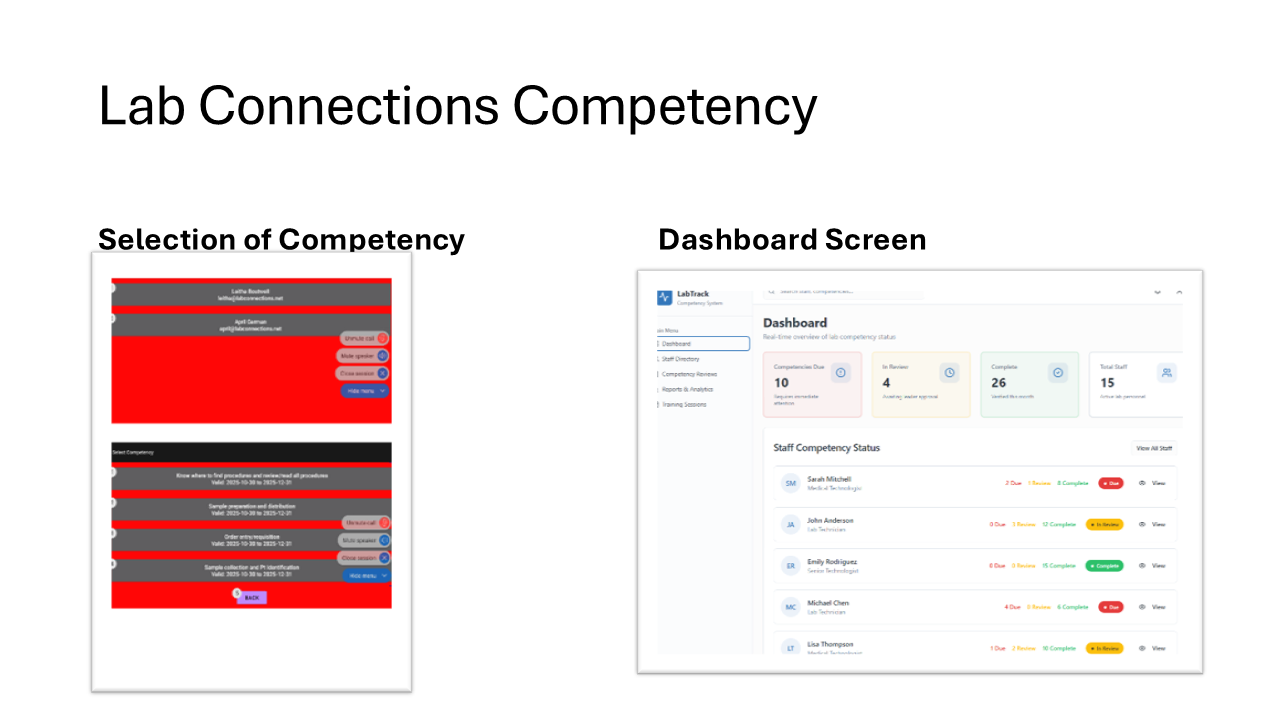
“Our goal was to combine new technologies that not only make it easier to capture the competency assessment process but also improve how the data is managed,” explained April. “We set out to build a fully integrated software platform—one that alerts users to upcoming assessments, automates scheduling, and provides a real-time dashboard to track personnel competency status across the laboratory.” She added that the software is particularly valuable for rural and critical access laboratories, which continue to face staffing shortages and training challenges.
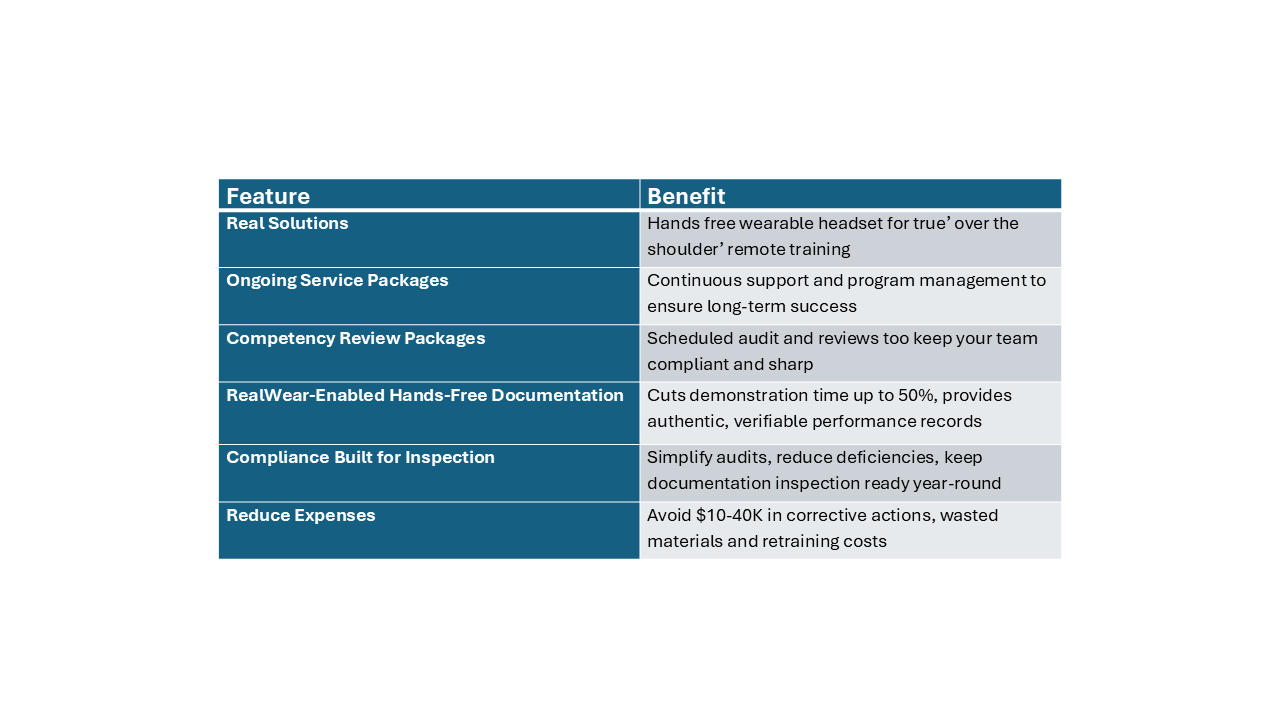
Table 1: Lab Connections Competency Software Features
Taking It to the Lab: Proving the Concept
Lab Connections is currently piloting its Competency Assessment software and hardware in partnership with Klickitat Valley Health (KVH) Laboratory in Washington. The beta program integrates the virtual reality headset platform with software designed to align with the June 2025 CLIA Interpretive Guidelines (QSO-25-10-CLIA), which now permit the use of virtual reality technology—eliminating the traditional requirement for face-to-face competency assessments.
“We expect to complete our beta evaluation in January 2026, with a full launch planned for the second quarter of 2026,” noted Leitha, who is on-site overseeing the testing process. “This software is truly a game-changer and one of the first to hit the market for personnel competency assessment. It transforms what was once a manual, time-consuming process into a highly interactive, efficient, and secure system that enhances both compliance and confidence in laboratory performance.”
About Lab Connections
Leadership team blends laboratory, technology, and operational expertise:
April German, MLS(ASCP) – CEO and Quality Assurance Director; a regulatory and quality expert with Westgard certification and deep experience guiding laboratories through CLIA, CAP, and COLA compliance.
Leitha (Leigh) Boutwell, MLS(ASCP) – Chief Operations Officer and Business Partner; an accomplished laboratory operations executive with a track record of driving profitability, opening new facilities, and stabilizing distressed laboratories nationwide.
Aaron Mayfield – Chief Information Officer, overseeing system architecture, data security, and technology integration for the VR platform.
Jay Ward – Software Developer, specializing in interactive and immersive application design for regulated industries.
What to learn more? Click here.
.png)